In this 2nd installment, I will now present a portion of the origins of the shroud. Most are unaware as to the precise beginnings of the Shroud of Turin, which I think, in proper respect, should be accounted for. The first page of mention in this history commences in medieval France.
FRANCE 13th century; “Sindonology” σινδών (Greek word for winding sheet.)
It is paramount to remember when reading this essay that from quite early on in its existence, the Shroud of Turin was not conceived as an historic relic, even when these were, indeed, the days that religious relics was quite a lucrative business for the church; it kept people coming back and giving money to parishes and churches all around the regions and towns in which they lived. As early as the 13th century, the Shroud opens its Genesis appearance. In a village called Lirely, there was a church there endowed by a local knight who went by the name of Geoffroi de Charny; this knight garnished his reputation as a brave warrior who fought in the Hundred Years War. Sir Chanry’s friend, Robert de Caillac, in the year 1356, began displaying in the church a cloth that possessed a mangled image of a man, brutally beaten, and holes through hands which closely resembled the wounds of Jesus Christ; from that moment he claimed this was the authentic burial cloth of the Lors himself. Prior to the 14th century, no historical records of divine claims of the shroud exist in written form. But by 1390, the archbishop of Troyes, Pierre d’Arces (who procured jurisdiction over this church in Lirely), composed a lengthy letter to Antipope Clement VII that this cloth that was growing in popularity was a complete hoax. The letter still survives and can be read for yourself. Nevertheless, Clement VII1issued a papal bull for the shroud to be displayed if it was recognized and conveyed to pilgrims that it was merely an “artistic” impression of the passion of Jesus and nothing further. Sometime during the year 1415, the shroud was moved from Lirely and taken to the castle Château de Monfort for safekeeping; from there, by the granddaughter of Sir Charny, took possession of the cloth and had it displayed in the church of Saint-Hippolyte, Doubs; however, she did this by illegal means and the shroud became a project of litigation. Despite this, she refused to give up the shroud and bequeathed it to Louis, the Duke of Savoy in 1453; the results of these actions led to her excommunication from the Catholic Church.

The shroud grew immensely popular in the House of Savoy and by 1506, Pope Julius 2nd authorized its veneration. How this process was conducted is not entirely known but it became instantly accepted. The 1st famous year of the Shroud is 1532 when it caught on fire in the church of Chambéry. The Poor Clare nuns in this church sewed patches over the burning holes that are preserved to this day. By 1578, the next famous year of the shroud, it is sent to the city of Turin in Italy by the actions of Emanuel Philbert, Duke of Savoy. Over the next several hundred years, many restoration projects were placed on the shroud, and it even survived a few more fires, miraculously!
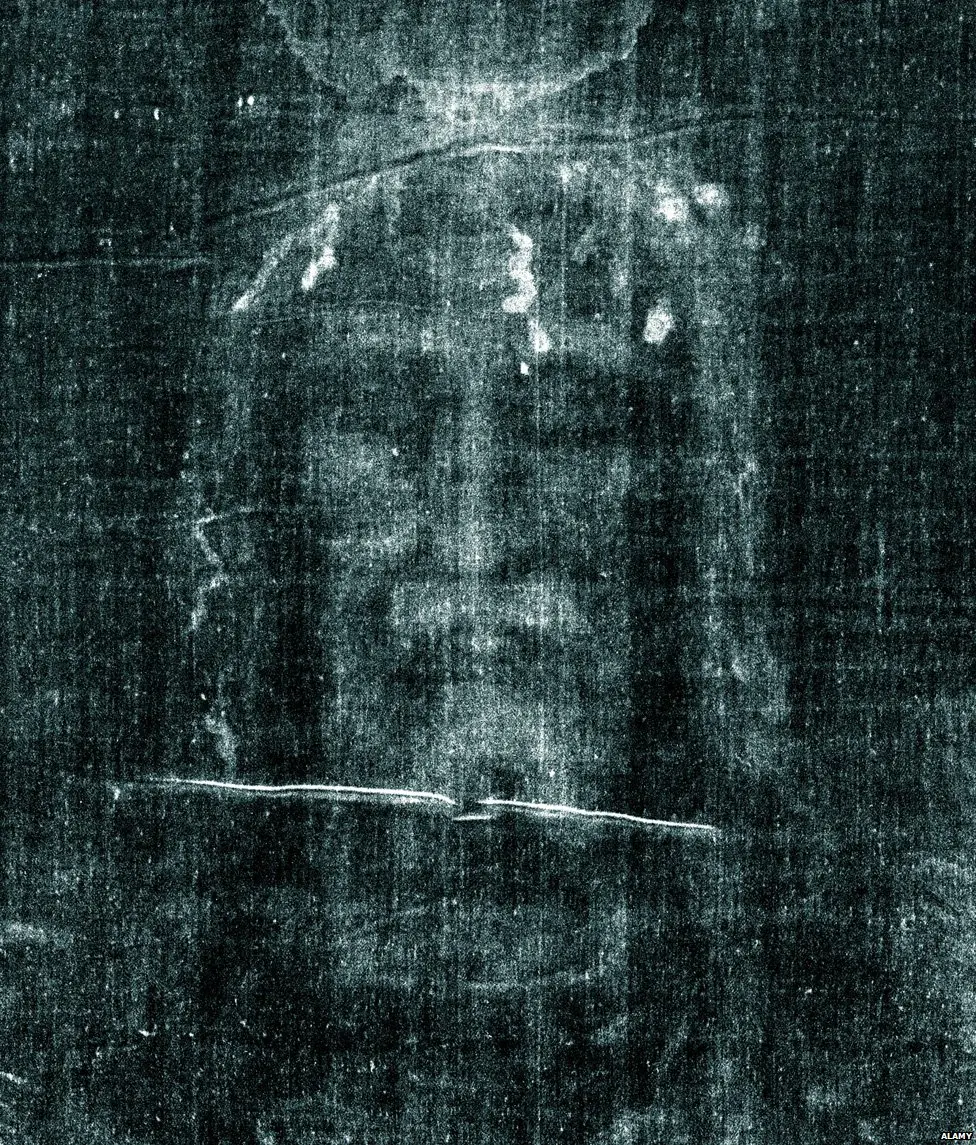
Since the 17th century, the Shroud has been preserved in the chapel at the Royal Palace of Turin; the architect, Guarino Guarini, drafted a special cathedral that currently houses the relic. In 1694, repairs were, again, made to the shroud by Father Sebastian Valfre, a catholic priest, more commonly known by his town name of the ‘Apostle of Turin.” In 1868, even more repairs were made to the cloth by Princess Maria Clotilde of Savoy; finally, the first photographs were taken of the shroud in 1898 by Italian photographer Secondo Pia where his famous negative of the image of a man’s face is world renown.


© 2025, Mark Grago. All rights reserved.
- The first dated documents referring to the Shroud are a series of letters and bulls by Pope Clement VII, dated 28 July 1389 (letter to de Charny), 6 January 1890 (a bull and two letters), and 1 June 1390 (another bull). The first refers to some previous correspondence, with Geoffrey II de Charny, with Pierre d’Arcis, and with Cardinal Pierre de Thury, who had visited de Charny on on his way back to Avignon after a papal mission to Paris. The pope seems slightly surprised that d’Arcis has forbidden, under threat of excommunication, the display of a figure or representation of Christ’s shroud which de Charny had acquired from his father, and formally permits it, pardons the excommunication, and says he has enjoined the bishop to perpetual silence. The claims appear to be more fabricated and mischievous as time went on with its history and continuing of controversial authenticity